

7 Baseball Uniform Replacement Schedule Rules for Teams

Last Updated: October 30, 2026
Quick Summary
Most baseball uniforms last two to three seasons of regular play before replacement, with pants failing first and jerseys outlasting them. A baseball uniform replacement schedule should plan for each piece separately, since jerseys, pants, caps, socks, and belts each wear out at a different rate. Teams that rotate two sets and wash properly stretch that to four seasons.
Run a condition check at midseason and season's end, and retire any item that fails two or more checks.
Budget a replacement reserve equal to about one-third of the original uniform spend per season.
Place preseason orders 6-8 weeks before the first game and confirm turnaround in writing.
Repair small seam and button failures, replace single failed items, and reorder a full set when more than a third fails.
Wash uniforms in cold water, inside out, and hang to dry, never machine-drying a jersey.
Table of Contents
Why a Baseball Uniform Replacement Schedule Matters
A baseball uniform replacement schedule is a written plan that sets when each part of a team's uniform gets inspected, repaired, rotated out, or reordered. Most teams skip this step and pay for it later, mid-season, when a jersey tears before a playoff game.
At Hometown Team Sports, we work with coaches, athletic directors, and team managers who all face the same problem: uniforms wear out on their own timeline, not the team's. A schedule turns that chaos into a budget line and a checklist.
Here is what most guides get wrong. They treat uniforms as one item. In reality, a uniform set is six or seven items, and each one fails at a different rate.
The jersey fades and stretches
The pants blow out at the knees first
Caps lose shape and color
Socks thin out and hole up
Belts crack and stiffen
Plan for each piece separately, and the whole program gets cheaper and calmer.
How Long Do Baseball Uniforms Last?
Most baseball uniforms last two to three seasons of regular play before replacement, with pants failing first and jerseys outlasting them. Teams that rotate two sets and wash properly stretch that to four seasons.
That is the short answer. The longer one depends on four things:
Games per season. A travel team playing 50 games wears gear twice as fast as a rec team playing 20.
Practice use. Players who practice in game jerseys burn through them faster.
Laundry habits. Hot water and high heat break down fabric and color.
Fit. Tight uniforms tear at seams; loose ones snag and stretch.
Youth teams add a fifth factor: growth. A player who outgrows a jersey in one season has not worn it out, but the team still needs a replacement.
There is no single national standard for uniform lifespan. Use the two-to-three-season range as a starting point, then adjust for your own game count and care routine. Track your own results year to year and the pattern becomes obvious.
Baseball Uniform Replacement Signs to Watch For
Replace a uniform item when it fails a condition check, not when the calendar says so. Condition beats age every time.
Run this check at midseason and again at season's end. Pull every item out and score it:
Color fade. Compare a washed jersey to a new one under daylight. Visible fade means the set is aging.
Fabric thinning. Hold the jersey up to light. Thin spots at the shoulders and seat mean failure is close.
Seam failure. Check armpits, side seams, and the crotch of pants. Any pulled stitching needs repair now.
Stains that will not lift. Grass, clay, and red dirt set in over time. Permanent stains make a uniform look worn out even when the fabric is fine.
Stretched or shrunken fit. If a jersey no longer fits the player who wore it last season, it is out of the rotation.
Faded names and numbers. Heat-applied numbers peel; stitched ones hold up better. Peeling numbers are a replacement signal.
Cap breakdown. Sweatbands go stiff and brims lose shape. A floppy cap reads as sloppy on game day.
A simple rule: if an item fails two or more checks, retire it. One failure means repair or reserve duty.
Building a Baseball Uniform Rotation Plan
A uniform rotation plan splits your gear into game sets so no single set takes every game. This is the cheapest durability upgrade a team can make.
Here is how we would build one:
Count your games. List every game on the schedule, home and away.
Assign sets. Home whites for home games, away greys for road games, alternate uniforms for tournaments and special dates.
Alternate within sets. If you own two home jerseys per player, flip them every other home game.
Wash after every use. Cold water, mild detergent, inside out, hang to dry. Never machine-dry a jersey.
Store flat or hung. Folded stacks crush caps; hangers keep jerseys in shape.
The rotation also solves a scheduling problem. Home and away sets mean players always know what to wear, and the equipment manager always knows what needs washing.
Watch out: skipping the cold-water rule is the fastest way to fade a set. Hot water and dryer heat do more damage in one season than a full schedule of games.
Baseball Uniform Budget Planning for Every Team Size
Budget for replacement as a yearly line item, not an emergency. The gap most guides leave is the math: they say "set a reserve" without showing how to size it. Here is a working method.
Start with a per-player replacement cost, not a per-team number. Add up what it costs to re-kit one player in the items that fail most often, typically pants, a jersey, socks, and a cap. Multiply by roster size, then apply a wear factor:
Rec and youth teams (about 20 games): budget for roughly one-third of the roster needing a partial replacement each season.
High school programs (30-40 games across levels): budget per level, because freshman, JV, and varsity wear gear at different rates and one level's failures should not drain another's line.
Travel and club teams (50+ games): plan on pants every season and jerseys every other season; high game counts make pants the recurring cost.
Adult leagues: fewer replacements by age, but harder play means condition checks drive the spend more than the calendar.
A common pattern is to hold a replacement reserve equal to about one-third of the original uniform spend per season. For a concrete example of bundling gear at a set cost, see the Erskine Baseball "The Double" Player Pack. That covers normal wear without a mid-year scramble. If your program replaces full sets on a fixed cycle, the reserve is simply the set cost divided by the number of seasons in the cycle.
Bulk ordering can change the math in both directions. Readers comparing bundle contents and pricing can review the Erskine Baseball "The Homerun" Player Pack. Ordering spares of common sizes can help prevent mismatched replacements, though it brings storage needs and the risk of holding sizes that no longer fit.
Pricing depends on quantity, decoration, and delivery timing, so check current pricing on our website or request a quote before you set a reserve.
Pro Tip Track actual replacements against the reserve at season's end. Two years of your own numbers beat any generic percentage.
Season-by-Season Uniform Replacement Calendar
Map replacement to the baseball calendar so decisions happen in the off-season, not mid-pinch. The unique angle here is lead time: most schedules tell you what to do but not how far ahead to do it. Here is a workable year with buffers built in.
Time of Year | Task | What to Check | Lead Time |
Preseason | Full inventory audit | Count every item, score condition, flag repairs | 8-10 weeks before first game |
Preseason | Fitting day | Size every player, note growth needs | Same week as audit |
Preseason | Order placement | Reorder failures, confirm turnaround in writing | 6-8 weeks before first game |
Early season | Delivery buffer | Inspect arrivals, fix sizing exchanges | 2 weeks before first game |
Midseason | Condition check | Repair seams, retire failed items | Midpoint of schedule |
Midseason | Replacement order | Reorder single failed items | 3-4 weeks before needed |
Late season | Rotation review | Note which sets faded fastest | Final two weeks |
Off-season | Budget reset | Set next year's replacement reserve | Within 30 days of season end |

Two dates matter most: the preseason audit and the order deadline. If you need uniforms by mid-March for a spring season, work backward from that date. Confirm the production and delivery window in writing before you place an order. Build a two-week buffer before the first game so sizing exchanges do not become game-day problems.
Midseason replacements are where calendars usually break. Keep a small spare kit, a few jerseys and pants in common sizes, so a torn item does not force a rush order. When you reorder midseason, confirm the window with us before you order, since decoration and customization can add time.
Watch Out A calendar without a delivery buffer is a wish list. The two weeks before the first game are for exchanges, not for waiting on a shipment.
The off-season reset is the cheapest step. Thirty minutes of review, which sets faded fastest, which sizes ran out, what the reserve actually covered, sets next year's plan on real numbers instead of guesswork.
Repair, Replace, or Reorder: Making the Call
Decide by cost and condition: repair small seam and button failures, replace single failed items, and reorder a full set when more than a third of it fails at once.
Use this quick framework:
Repair when the fabric is sound and the fix is a seam, button, or snap.
Replace when one player's item fails and the rest of the set is fine.
Reorder when color fade or fabric wear hits a large share of the set, so replacements match.
Mismatched replacements look worse than a planned reorder. If you reorder, do it as a full set so the team identity stays consistent. That is also the moment to revisit styles, color choices, and wordmark.
When the call is to reorder, a custom option keeps the look consistent.
Get Your Team's Uniform Plan Started
The hard part is not the plan. It is doing the audit, sizing, and ordering without losing a week to spreadsheets and email chains.
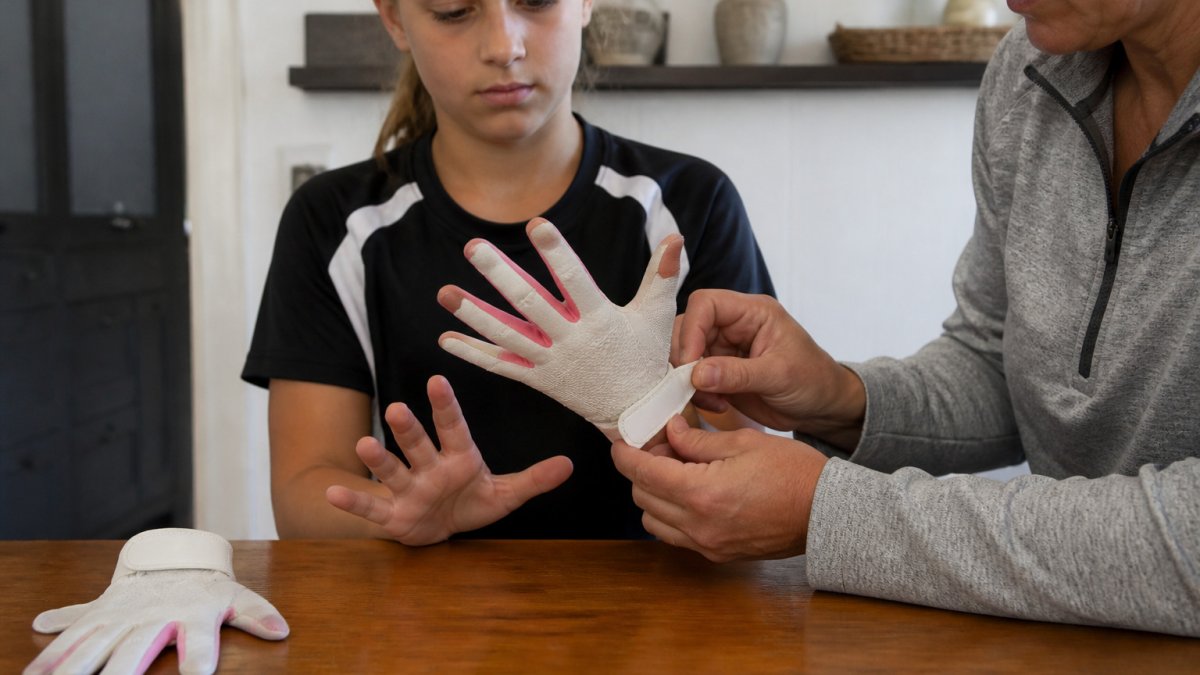
That is where we come in. Hometown Team Sports offers full team packages, and our batting gloves come in 42 leather color options with unlimited fabric color choices. We can help you think through sizes, quantities, and names for your order.
Ready to put a replacement schedule to work? Set up a Team Store to order and manage uniforms. Visit the Hometown Team Sports website to get started with your team's uniform plan.
Frequently Asked Questions
How often should a baseball team replace its uniforms?
Most teams replace their primary uniform set every two to three seasons, depending on use. Teams that play more games per year often need new jerseys sooner than casual recreational teams. A baseball uniform replacement schedule should account for games played, laundry frequency, and whether the uniform is shared or assigned to individual players. Inspect uniforms at the end of each season to decide whether to repair, replace, or rotate.
What are the first signs that a baseball uniform needs replacing?
Look for fading colors, stretched or torn fabric, peeling numbers or lettering, broken zippers, and worn belt loops. Pants often show knee wear first, while jerseys develop elbow and shoulder thinning. If more than a quarter of your roster has visible damage in the same area, it is time to plan a full replacement rather than patching individual pieces. Keep a simple log of these baseball uniform replacement signs to justify the expense to your board.
Should teams replace all uniforms at once or rotate them over several seasons?
Rotating replacements over two to three seasons spreads the cost and keeps some fresh pieces on hand. A baseball uniform rotation plan might replace home jerseys one year, away jerseys the next, and pants the year after. This approach works well for youth and amateur teams with tight budgets. However, if your team changes its logo or color scheme, a full replacement is usually necessary to keep the roster looking consistent.
How can teams budget for uniform replacements?
Start by estimating the cost per player for a full uniform set, then divide that by the expected lifespan in seasons. Allow some extra room for repairs and emergency replacements. Many teams set aside a fixed amount each season in a replacement reserve. For baseball uniform budget planning, involve parents and sponsors early and consider fundraising specifically for uniforms. Request quotes from suppliers like Hometown Team Sports to get accurate numbers for your team size and customization needs.


Comments