

Custom Team Apparel for Travel Leagues: 2026 Guide

Table of Contents
Last Updated: October 18, 2026
Why Travel League Uniforms Need a Different Plan
Travel league seasons break standard uniform ordering. A rec team orders once in February and is done.
At Hometown Team Sports, we build team packages for exactly this kind of schedule: multiple sports, rolling rosters, and parents who need a clear process.
The core difference is logistics. Travel teams deal with tournament travel, roster churn, and a longer wear cycle than a single-season rec team.
Building Your Custom Travel Baseball Uniforms Package
A complete package starts with the layers, not the logo. Most travel programs need three tiers: the game uniform, the warm-up layer, and the practice set. Build the game uniform first, then fill in the rest.

Jerseys, Pants, and the Layers Around Them
Custom travel baseball uniforms usually mean a jersey, pants, and a belt-and-sock combination that ties the look together. From there, add the layers players actually wear:
Warm-up jackets and pullovers for pregame and cold mornings
Practice shirts and shorts that can take repeated washing
Hoodies and polos for travel days and team events
A common mistake is ordering the game uniform and treating warm-ups as an afterthought. In practice, the warm-up layer gets worn more than the jersey across a full travel season.
Pro Tip Order practice gear in a neutral colorway that can carry over to next season. Game uniforms change with team colors and sponsor updates; practice sets usually don't.
Custom Team Jerseys: Design, Names, Numbers, and Colors
Start the design with the team identity locked down before anyone opens a design tool. Team colors, a team logo, player names, and player numbers should all be decided before the first mockup. Changing any of those mid-order resets the approval process.
Custom team jerseys carry the most visible design decisions, so treat this step as a project with a deadline. A few practical rules:
Confirm team colors against physical swatches when possible, not just a screen. Screens vary, and a color that looks right on a monitor can read differently in fabric.
Set a name and number policy early. Decide on name format (first name, last name, nickname), number font, and number placement.
Get one approval signature. One coach or manager should sign off on the final design so feedback doesn't arrive from five directions.
A professional designer can turn a rough idea into a print-ready file. The goal is to catch a problem on screen, not on the field.
Custom Batting Gloves and the Small Gear That Sets a Team Apart
Batting gloves are where a travel program can look sharp without redoing the whole uniform.
The same logic applies to the small gear: helmet decals, bat bags, and socks. These pieces are cheaper per unit than a jersey, and they do more for team identity than most coaches expect.
Order the small gear with the uniform package so everything lands together and matches.
Fabric, Sizing, and Roster Changes Across a Long Season
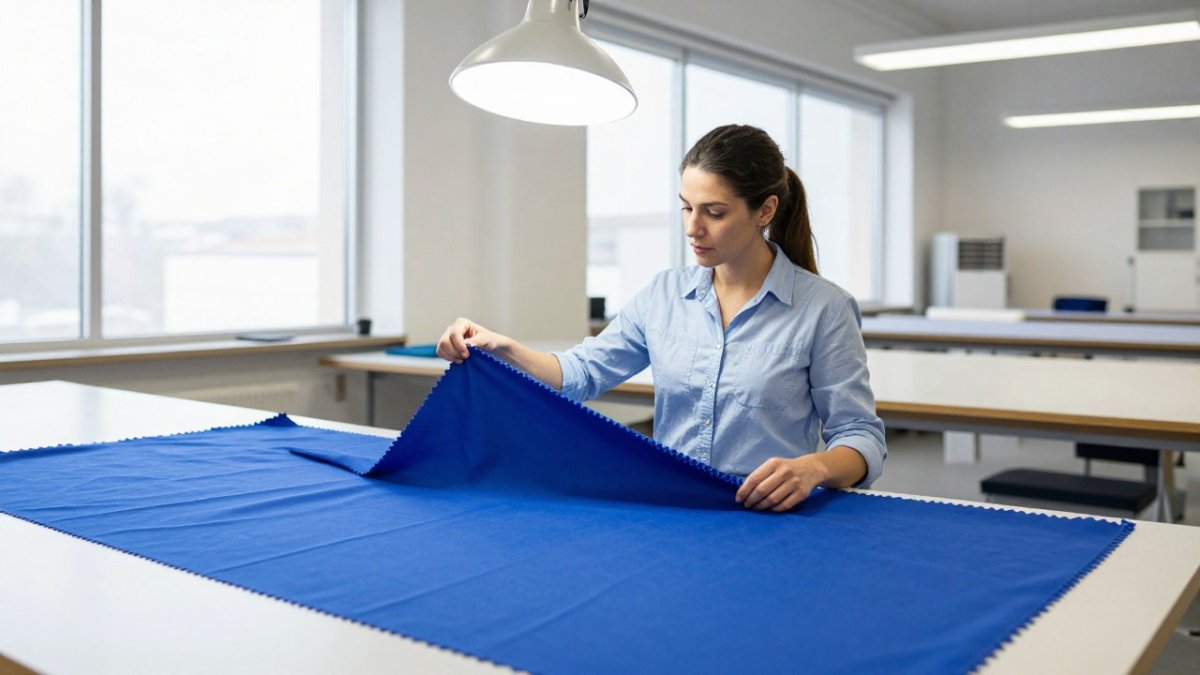
Fabric choice and sizing decide whether a uniform survives the season. For travel teams, prioritize performance fabric with moisture-wicking and breathable qualities, plus durability for repeated washing. Lightweight Sereno fabric and full leather construction are the kinds of materials that hold up to a long schedule.
What to actually evaluate in a fabric
When you compare samples, ask four concrete questions:
Breathability: Hold the fabric up to a light. If you can't see any glow through it, it will trap heat on a July tournament day. Knit jerseys with visible airflow channels beat tightly woven fashion fabrics for summer play.
Stretch and recovery: Pull a sleeve cuff and release it. A fabric that stays stretched out will sag at the shoulders by mid-season. Look for two-way stretch with spandex content, and check that the jersey returns to shape.
Colorfastness: Ask whether the decoration is dyed, sublimated, or applied as twill. Sublimated graphics won't crack or peel, but dark colors can fade after repeated hot washes. Twill and embroidered marks hold color but add weight.
A practical test: order one sample jersey in your darkest team color and one in your lightest, wash both five times the way a parent would, and compare.
A sizing process that survives a rolling roster
Sizing is the other half of the equation, and travel rosters change. A player gets called up in June, another leaves for a showcase, and a jersey ordered in March no longer fits the roster in July. Plan for it:
Run a try-on session with sample sizes, not a parent's guess. Have players try on a jersey over their game undershirt and raise both arms, the hem should stay below the waistband.
Measure, don't guess, for pants and jackets. Record waist, inseam, chest, and sleeve length on a single sheet. Keep the sheet with the roster so a June addition can be matched to the closest existing size.
Order a buffer of common sizes. A common pattern is to add one or two extra jerseys in the middle sizes (typically youth large through adult medium) and one extra pair of pants in the most common waist. Confirm with your vendor whether extras can be ordered at the same per-unit price or carry a small-order surcharge.
For youth and travel teams, fit matters as much as color. Get the fit right at the sizing stage, not after the first game.
Pro Tip Photograph the sizing sheet and store it with the team's design files. When a new player joins in year two, you can match them to a size without re-running the whole try-on session.
Late additions and replacements
Build a short written policy for roster changes before the season starts. It should answer: Who approves a late add? Is the player's family billed directly or does the team absorb the cost? What's the lead time for a single reorder? A one-paragraph policy prevents the mid-season argument that stalls an order while a tournament date approaches.
Budget Planning and the Total Cost of a Travel Season
Budget planning is where most travel programs get surprised. The sticker price of a jersey is not the total cost of team apparel. The real number includes the full package, re-orders, shipping, and the cost of replacing gear mid-season.
Build the budget per player, not per order
Team managers who budget by order total tend to under-collect from families. Build the number per player instead, then multiply by roster size and add a buffer. A workable structure:
Cost Category | What It Covers | How to Plan It |
Game uniform | Jersey, pants, belt, socks | Price per player from a written quote; size carefully to avoid replacements |
Warm-ups and practice | Jacket, pullover, practice set | Often worn more than game gear; budget as a full line, not an add-on |
Small gear | Gloves, hats, helmet decals, bat bags | Lower per-unit cost but easy to forget; list each item |
Reorders and late adds | Extra jerseys, pants, single replacements | Add a buffer of roughly one to two players' worth of common sizes |
Shipping and delivery | Bulk ship to one address vs. direct-to-family | Direct shipping usually costs more per family; bulk shipping needs a distribution plan |
Setup and artwork | Logo digitizing, screen or sublimation setup | Often a one-time charge; confirm whether it repeats on reorders |
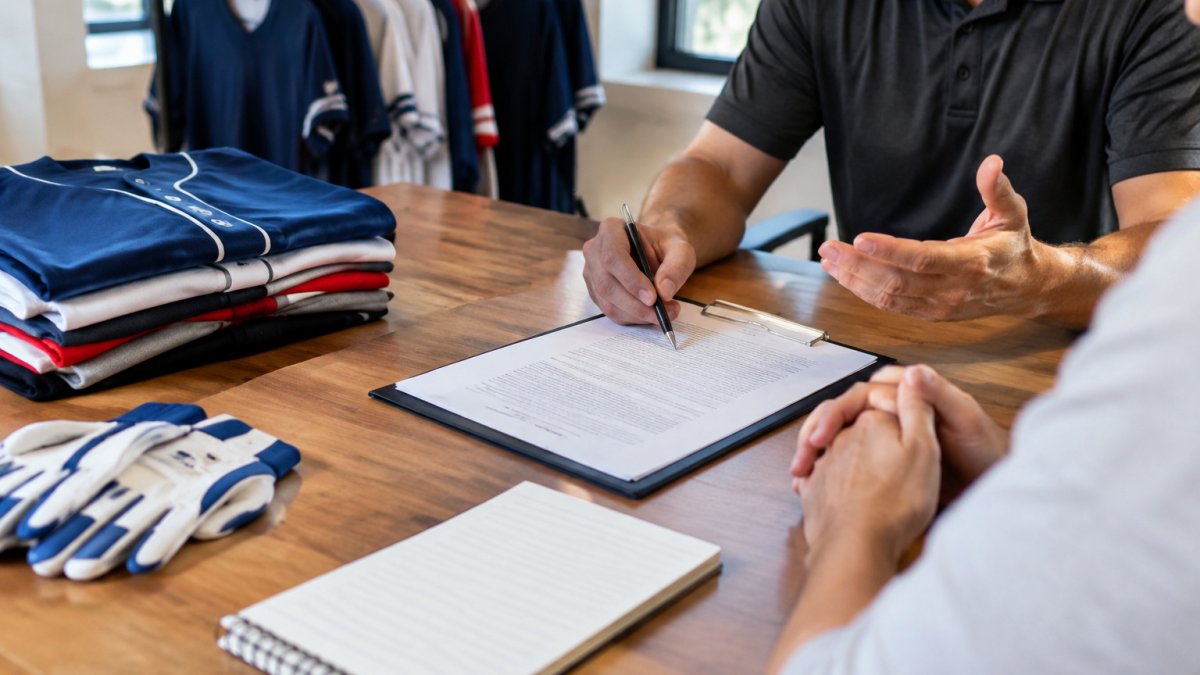
Pricing for custom team apparel depends on quantity, decoration, and delivery timeline, so get a quote against your actual roster rather than a per-piece estimate. A small youth team of 12 and a full travel program of 40 have different economics. Ask for the quote in writing, including shipping and any re-order terms.
The costs that don't show up on the quote
Three line items routinely blow up a travel apparel budget:
Replacement uniforms. A lost jersey or a player who outgrows pants mid-season triggers a single-unit order. Single units often carry a higher per-piece price and a minimum quantity. Budget for two to three replacements per season on a roster of 15 or more.
Rush production. Tournament schedules don't move, and a late approval can force expedited production. Ask the vendor for the standard lead time and the rush cutoff date in writing, and treat the cutoff as a hard deadline in your planning calendar.
Direct shipping. If families order individually through a team shop, shipping is charged per address. Bulk shipping to one manager is cheaper per unit but requires sorting and distribution at a practice before the first tournament.
Presenting the budget to families
A per-player cost sheet that lists each item, the quantity, and the total is easier for families to approve than a single lump sum. Include the reorder policy and the deadline for size submissions on the same sheet. Programs that collect sizes and payment in one window avoid the slow trickle of late orders that pushes the whole production run back.
Watch Out Don't finalize a budget without confirming production time and delivery dates in writing. A late uniform delivery can force a team to play a tournament in mismatched gear, and that's a cost no line item captures.
A simple total-cost formula
Total season apparel cost = (per-player package price × roster size) + (buffer units × per-unit price) + setup and artwork + shipping + a replacement reserve of roughly two to three units. Get each input from a written quote, and revisit the formula when the roster changes. That formula is the difference between a budget that holds and one that needs a mid-season fundraiser.
Your Team Apparel Ordering Checklist, Start to Finish
A team apparel ordering checklist keeps the process from drifting. Work through it in order, and don't skip the approval step.
Total Time: 4-8 weeks depending on production and delivery Difficulty: Beginner to intermediate
What You'll Need
Final roster with sizes
Team colors and logo files
Budget approval
Confirm roster count and collect sizes with a try-on session
Lock team colors, logo, names, and numbers
Request a written quote for the full package
For travel-league apparel planning, the checklist matters more than any single product choice. A program that runs this list will avoid the two most common failures: a late delivery and a roster that doesn't match the order.
Frequently Asked Questions
When should a travel league order custom team apparel?
Start six to eight weeks before your first tournament, and earlier if your roster is still filling. Design approval, sizing collection, and production all happen in sequence, so late orders force rushed decisions on colors and numbers. Confirm your league's uniform rules first, then lock the design, collect sizes, and place the bulk order. If your season starts in March, having everything settled by mid-January leaves room for a reprint on a mis-sized item without delaying the team.
What apparel should a travel team order besides uniforms?
Plan beyond the jersey and pants. Most travel programs add warm-up jackets or hoodies, practice shirts, shorts, and hats so the team looks consistent at tournaments and on travel days. Custom batting gloves and socks are inexpensive ways to tie the look together. Ask families what they will actually wear off the field, then build a small fan gear option for parents and siblings. A team shop with direct shipping lets families order extras without a manager collecting money for every item.
How do you choose durable uniforms for a travel team?
Look at fabric weight, stitching, and how the decoration is applied. Moisture-wicking performance fabric with reinforced seams holds up to repeated washing and back-to-back games better than thin cotton blends. Ask how names and numbers are attached. Compare care requirements too: a uniform that needs special washing will wear out faster in a busy household. Request a sample or fabric swatch before committing a full roster.
What information do you need before ordering custom team jerseys?
Have five things ready: final roster with exact spelling of player names, jersey numbers, size selections per player, your color and logo files in a print-ready format, and a delivery date tied to your first game. Confirm who has approval authority on the design so revisions do not stall. If your logo is a school or club mark, verify you have permission to reproduce it. A written team apparel ordering checklist keeps all of this in one place and prevents the last-minute scramble.
Travel seasons don't wait for a slow vendor. Hometown Team Sports builds full team packages with fast service and delivery, premium materials like full leather and lightweight Sereno fabric, and 42 leather color options for custom batting gloves. Get a quote for your roster and order online today.

Comments