

Avoiding Peeling Logos on Custom Jerseys: 2026 Guide

Table of Contents
Last Updated: October 14, 2026
Why Custom Jersey Logos Peel (and What It Costs Your Team)
A peeling logo is the most common failure we see on custom jerseys, and it almost always traces back to heat, friction, or weak adhesive.
The good news: most peeling is preventable. Below, we'll show you exactly how to wash, dry, and repair jerseys so the decoration survives the season.
The cause usually comes down to how the logo was attached in the first place.
Heat-Pressed vs. Sublimated Decoration: Different Failure Points
Heat-pressed logos are vinyl or twill patches bonded to fabric with a heat press. Sublimated designs are dyed into the fabric itself, so there's no raised layer to lift.
That difference decides how each one fails:
Heat-pressed logos peel at the edges when adhesive breaks down
Sublimated designs fade or crack, but they don't "peel" in the traditional sense
Stitched patches fail at the thread, not the bond
Heat transfer needs the right temperature, pressure, and dwell time. Miss any of those, and the bond starts weak. The FTC's guidance on textile labeling and care is a useful reference for what care instructions should tell your buyers.
Watch Out The biggest mistake teams make is drying jerseys on high heat. It softens the adhesive on heat-pressed logos, and the patch starts lifting within a few washes.
How to Wash Custom Jerseys Without Damaging Logos
Wash custom jerseys inside out in cold water on a gentle cycle, and skip the dryer entirely. This one habit prevents most logo damage.
Here's the routine we recommend to every team we outfit:
Turn the jersey inside out before it hits the hamper
Use cold water only
Choose a mild liquid detergent
Bleach and harsh chemicals eat away at adhesive. Fabric softener leaves a residue that weakens the bond between patch and fabric. Both speed up peeling.
Step-by-Step Washing Routine for Game Day and Practice Jerseys
Total time: about 40 minutes of machine time, plus air drying.
Empty the pockets and close zippers. Loose items and open zippers snag decoration in the drum.
Turn each jersey inside out. This puts the logo against itself, not against other garments.
Wash cold on gentle. Hot water is the enemy of heat-pressed logos.
Use mild liquid detergent. Powder can leave grit that rubs the patch.
Skip bleach and softener. No exceptions.
Hang dry or lay flat. Keep jerseys out of direct sun, which fades sublimated color.
Never iron directly on a logo. If you must press out wrinkles, use a pressing cloth.
Expected result: logos stay bonded and colors stay sharp through a full season.

Heat-Pressed Jersey Logo Care: Daily Habits That Prevent Lifting
Heat-pressed jersey logo care comes down to three habits: cold washing, air drying, and keeping heat away from the patch. Friction is the silent killer. A logo that rubs against a duffel bag or a car seat every day will lift at the corners long before it should.
Jersey Passion
A few daily habits make the difference:
Fold jerseys so the logo faces inward
Avoid stacking heavy gear on top of decorated jerseys
Never leave jerseys in a hot car
What most guides miss is timing. A small lift at one corner takes seconds to fix. Wait two weeks, and the whole patch curls.
Sublimated Logo Maintenance: Protecting Dye-Based Designs
Sublimated logo maintenance is different because there's no adhesive to fail. The dye is part of the fabric, so the threat is fading and abrasion, not peeling.
Protect sublimated designs by:
Washing inside out to reduce surface friction
Drying in shade, never in direct sun
Avoiding rough surfaces like concrete and asphalt
Sublimated designs hold up well, but they aren't indestructible. Repeated abrasion against abrasive surfaces dulls the print over time.
How to Fix a Peeling Jersey Logo: A Decision Tree
How to fix a peeling jersey logo depends on two things: how far the damage has spread, and how the decoration was applied. A small lift on a heat-transfer vinyl number can be re-pressed at home. A fully detached embroidered patch usually needs a professional repair or replacement.
Start by identifying the decoration type, then match it to a damage level.
Step 1: Identify the Decoration Type
Heat-transfer vinyl (HTV) or heat-applied twill: A raised, rubbery or fabric-feel layer with a visible edge. This is the only type you can safely re-press at home.
Screen-printed transfer: A flatter, ink-like layer that can crack or flake. Re-pressing can sometimes re-bond it, but heat can also smear the ink.
Embroidered patch or stitched twill: Thread sewn through the fabric. It fails at the thread, not the adhesive, so heat won't help, it needs re-stitching.
If you can't tell which one you have, look at the back of the jersey. A sublimated design has no texture change on the reverse; a heat-applied patch usually leaves a faint impression or adhesive ghost on the inside.
Step 2: Match Damage Level to Action
Damage Level | What It Looks Like | Best Action |
Minor lift | One corner lifting, patch mostly bonded | Re-press at home with a pressing cloth |
Partial peel | Half the patch loose, adhesive still tacky | Heat press at a pro shop |
Full detachment | Patch off, adhesive spent or contaminated | Replace the patch or jersey |
Thread failure | Stitching broken on an embroidered patch | Re-stitch at a tailor or seamstress |
Sublimated fade | Color dull, no lift | No repair; replace when needed |
Step 3: Home Re-Press Settings by Material
These are starting points, not guarantees. Always test on a hidden area first, and always use a pressing cloth or parchment sheet between the iron and the decoration.
Polyester jersey, HTV or twill patch: Medium heat (roughly the "synthetic" or two-dot setting on most household irons), no steam, firm pressure, 15-20 seconds. Let it cool completely before moving the jersey.
Cotton or cotton-blend jersey: Medium-high heat, no steam, firm pressure, 20-30 seconds.
Screen-printed transfer: Lower heat and shorter dwell (10-15 seconds) to reduce smearing risk. If the ink looks glossy or tacky under the cloth, stop.
A common pattern is that a home iron fixes a corner lift but fails on a half-peeled patch, because household irons can't hold even pressure across the whole patch. That's when a pro shop with a real heat press is worth the trip.
Step 4: Cool, Then Check
Let the jersey cool flat for at least 10 minutes before you flex it. A patch that still lifts after a full cool-down is not going to hold, repeated re-pressing weakens the adhesive each time and can scorch the fabric.
Watch Out Never re-press a patch that has picked up lint, hair, or detergent residue on the adhesive side. Contamination is the number-one reason a home re-press fails within a week.
When to Repair, Replace, or Contact the Seller
Repair when the damage is small, the fabric is intact, and the decoration is heat-applied.
Replace when the patch is gone, the fabric under it is torn, or the decoration is sublimated and faded.
Contact the seller when peeling happens within the first few washes, when multiple jerseys from the same order fail the same way, or when the patch comes off cleanly while still warm. A "cold peel", a patch that releases cleanly at room temperature, usually means the adhesive never fully cured, which is a production issue, not normal wear.
Most custom jersey suppliers offer a workmanship window on decoration, commonly 30 to 90 days from delivery. Check the order confirmation or ask before you attempt a DIY repair, because a scorched or re-pressed patch can void that coverage.
Pro Tip Photograph the peeling patch, the inside of the jersey, and the care tag before you call the seller. Suppliers ask for those three images more often than anything else when evaluating a claim.
Preventing Logo Peeling During Custom Production
Preventing peeling starts on the production floor, not in the laundry room. Most consumer guides only cover washing and repair, but for custom jerseys the bond is decided long before the jersey ships, by artwork, transfer selection, application settings, and whether anyone tested the bond before running the full order.
If you're ordering custom jerseys for a team, these are the four production variables worth asking about.
1. Artwork and Placement
Thin strokes, tight negative space, and logos placed over seams or curved panels are the hardest to bond cleanly. A logo that crosses a side seam or sits on a stretch panel will lift at the seam edge first, because the fabric moves differently on each side. Ask your supplier how they handle artwork that overlaps seams, and whether they adjust the file or the placement to avoid it.
2. Transfer Selection
Not every heat-applied transfer is built for the same fabric or the same level of use. A transfer that works on a cotton tee may not hold on a stretch polyester game jersey that gets pulled on and off four nights a week. Ask what transfer the supplier uses, what fabric it's rated for, and whether it's designed for repeated washing.
3. Application Settings
The three settings that decide whether a heat-applied logo holds are temperature, pressure, and dwell time. Miss any one and the bond starts weak:
Too low a temperature leaves the adhesive under-cured, so the patch lifts at the edges within a few washes.
Too little pressure means the adhesive never fully contacts the fabric weave.
Too short a dwell time produces the same result as low temperature, a patch that looks fine on delivery and fails in the laundry.
A supplier who sets these per fabric, not per order, is far less likely to send you jerseys that peel.
4. Pre-Production Testing
Before a full run, a careful supplier presses a test piece and checks the bond. The common field test is a peel test: press the decoration, let it cool, then try to lift an edge. If it comes off cleanly while cool, the settings are wrong. If it stretches or tears the fabric before releasing, the bond is good.
Questions to Ask Before You Order
What decoration method do you use, and why did you choose it for this fabric?
How do you test adhesion before shipping a full order?
What care instructions come with the order, and do they match the decoration method?
A supplier who can answer those clearly is far less likely to send you jerseys that peel. Consistent testing is what separates a durable bond from a weak one.
Key Takeaway For teams ordering custom jerseys, the cheapest insurance against peeling is a supplier who tests the bond before the full run, not a lower price per jersey.
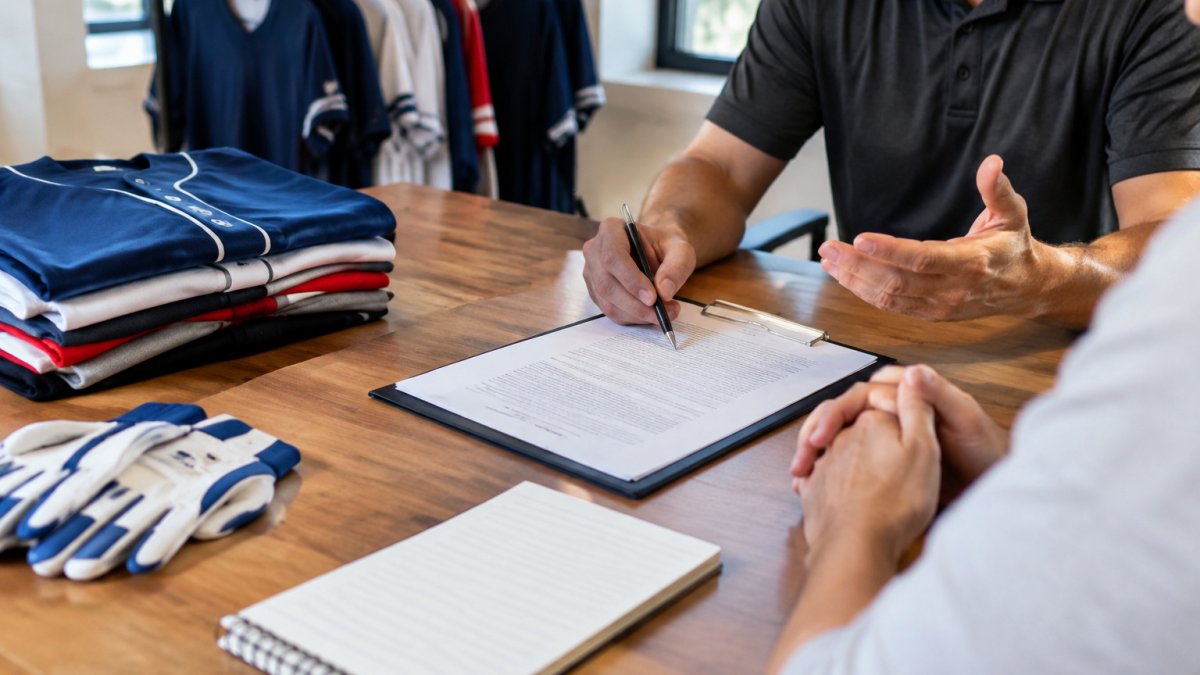
Teams like the Tampa Mustangs and Lady Bandits count on gear that holds up through a full schedule. That's the standard we build to at Hometown Team Sports, from full leather batting gloves to complete uniform packages with fast turnaround.
Conclusion: Protect Your Team's Investment All Season
Peeling logos are frustrating, but they're mostly avoidable. Cold washing, air drying, and early repairs keep decoration intact through the season. When you order custom jerseys, choose a supplier who controls the production process, not just the price.
Hometown Team Sports builds durable custom uniforms and equipment with premium materials, unlimited fabric color options, and fast delivery. We handle sizing and team packages so coaches can focus on the field.
Frequently Asked Questions
How do you fix a peeling logo on a jersey?
For heat-pressed logos, place a pressing cloth over the lifted area and press with an iron on medium heat (around 300-350°F) for 10-15 seconds. Let it cool completely before moving the jersey. For small lifts on sublimated designs, a fabric adhesive patch can cover the damage. If the logo is cracked or more than 30% lifted, contact the seller about replacement rather than risking further damage.
Can you put a jersey with a heat-pressed logo in the dryer?
No. Dryer heat breaks down the thermal bonding adhesive that holds heat-pressed logos in place. Always air dry jerseys by hanging them or laying them flat. If you must use a dryer, use the lowest heat setting and remove the jersey while it is still slightly damp. High heat is one of the leading causes of peeling logos on custom jerseys.
How should you wash custom jerseys to protect the logos?
Turn the jersey inside out, use cold water, and select a gentle cycle. Add mild liquid detergent, never bleach or fabric softener. Wash jerseys separately from items with zippers, hooks, or velcro that cause friction. Skip the dryer entirely and hang the jersey to air dry. This routine protects both heat-pressed and sublimated decorations through repeated wash cycles.
Why do heat-pressed team logos peel?
Heat-pressed logos peel when the thermal bonding adhesive weakens from repeated heat exposure, friction during play, or improper washing. Poor factory application, such as insufficient temperature or pressure during pressing, also causes early failure. Cold peel vs. hot peel methods during production affect adhesion quality. Jerseys pressed at the correct temperature and pressure, then cared for properly, hold up through a full season.

Comments