

7 Steps to Guarantee Uniform Color Accuracy

Last Updated: October 25, 2026
Quick Summary
To guarantee uniform color accuracy, approve a physical fabric swatch in writing before production, then measure every batch against it with a spectrophotometer and hold each run to a written Delta E tolerance. Keep the signed reference, measurement log, and tolerance numbers on file so every reorder is checked against the same conditions.
Approve a real fabric swatch in writing, never color from a website image.
Choose a spectrophotometer over a colorimeter because fabric dyes are prone to metamerism.
Take at least three readings per sample, rotating the sample 90° between readings.
Use Delta E 2000 and reject any garment scoring above 3.0.
Set a within-garment tolerance, with a common target of Delta E ≤ 1.5 between points.
Table of Contents
Why Uniform Color Accuracy Fails Without a Process
Most reorders go wrong before a single stitch is sewn. The colors drift, the reds turn orange, and nobody can explain why. For context on why color consistency matters across a full team order, see this overview of custom apparel for teams.
Uniform color accuracy is the practice of keeping every garment in a team order within a measured, agreed color tolerance from sample approval through delivery. Without a process, three things break:
The approved sample and the production run are never compared
No one measures color, so "close enough" becomes the standard
Each reorder starts from scratch with no reference
At Hometown Team Sports, we empower athletes to elevate their game with premium, durable, and affordable custom team uniforms and equipment.
What Color Accuracy Means for Team Gear
Color accuracy for team gear means the shade on the field matches the shade on the approved sample and on every teammate's jersey. It is measured, not eyeballed. A team that looks mismatched on game day did not buy bad uniforms. They skipped the steps that keep color consistent.
Step 1: Approve Custom Uniform Color Samples Before Production
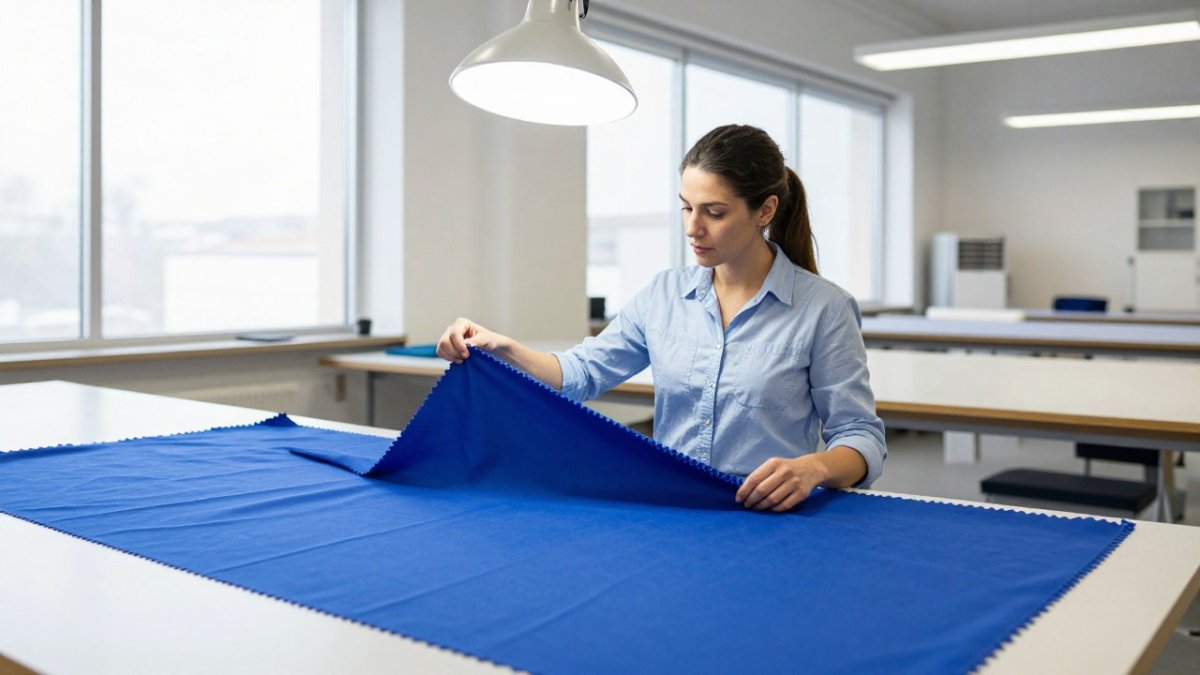
The single most effective safeguard is approving a physical sample before production starts. Ask for a real swatch of the actual fabric in your team colors, then sign off on that swatch in writing. That signed sample becomes your reference for everything that follows.
A common mistake is approving color from a website image. Screens render color differently, and fabric absorbs dye differently than pixels suggest.
Physical Swatches vs. On-Screen Colors
Physical swatches win every time. A screen glows; fabric reflects. On-screen colors look brighter and more saturated than the same shade on fabric. Treat the web preview as a starting point and the physical swatch as the contract. If you want to preview a full design before committing, using uniform design tools with a custom team uniform builder lets you build the look, then confirm it against a real swatch.
Step 2: Set Up Color Measurement Tools for Textiles
Eyeballing color across a full roster is how mismatches slip through. Use the right color measurement tools for textiles to turn "looks close" into a number you can track. The competitive gap here is instrument selection and upkeep: most guides say "use a spectrophotometer" and stop. This section covers which instrument to choose, how to take a repeatable reading, and how to keep the device honest.
Colorimeter vs. Spectrophotometer
Two instrument families do most of the work:
Colorimeter. A tristimulus device that reads color through three filtered channels. It is fast, inexpensive, and fine for checking whether a batch is close to a known reference. Its weakness is metamerism: two samples can read identical under one light source and diverge under another, and a colorimeter will not warn you.
Spectrophotometer. Measures reflectance across the visible spectrum (typically at 10 nm intervals from 360 to 750 nm) and can compute color under multiple illuminants. It is the better choice for textile work because fabric dyes and finishes are prone to metamerism, and because a spectral reading lets you compare samples under D65, A, and F11 without re-measuring.
For team apparel, a handheld, battery-powered spectrophotometer with a 8°/d or d/8° geometry and a 4 mm or 8 mm aperture is the practical choice. Smaller apertures help on curved seams and trim; larger apertures average out fabric texture. If you only buy one instrument, buy the spectrophotometer and use it for both spot checks and batch verification.
Taking a Repeatable Reading
Instrument choice matters less than reading discipline. A common pattern among production teams:
Warm up the device for the manufacturer's stated interval (often 5-15 minutes) before the first reading.
Calibrate against the white tile at the start of each session, and re-calibrate if the device has been moved or the temperature has shifted noticeably.
Back the sample with the same material every time. Fabric is translucent; a white backing tile and a black backing tile will give different readings on the same swatch. Pick one backing and record it in your log.
Take at least three readings per sample, rotating the sample 90° between readings to average out weave direction, and record the mean.
Use the same instrument, settings, and aperture for the reference and the production check. A reading from a different device is not a comparison.
Instrument Maintenance and Record Keeping
A drifted instrument produces confident wrong numbers. Keep the white calibration tile clean and stored away from light, replace it on the manufacturer's schedule, and send the device out for recertification annually if it is used for acceptance decisions.
You do not need a lab. A handheld spectrophotometer, a clean white tile, a consistent backing, and a simple log cover most team programs. The instrument matters less than consistency: same device, same settings, same lighting, every time.
Step 3: Match Fabric Colors Under Controlled Lighting

Color changes with the light. A jersey that matches under store fluorescents can look off under stadium lights or afternoon sun.
Three viewing rules keep comparisons honest:
View swatches at the same angle every time
Keep the light source consistent between checks
Compare against your approved reference, never from memory
Step 4: Run Uniform Color Quality Control on Every Batch
A batch that skips inspection is a batch waiting to disappoint. Uniform color quality control means checking every production run against the approved sample before it ships, not after it reaches the field. The unique angle here is objective acceptance: instead of "looks close," every batch gets a number and a pass/fail threshold.
Build a simple checklist:
Pull one garment per size from the run
Compare each against the signed reference swatch
Measure with the spectrophotometer and log the reading
Using Delta E and Uniformity Tolerances
Delta E is the standard number for color difference between two samples. It is a single value that combines lightness, chroma, and hue differences into one distance, so a lower Delta E means a closer match. The exact formula matters: Delta E 1976 (CIE76) is simple but overstates differences in saturated colors; Delta E 2000 (CIEDE2000) is the current recommendation for textile work because it better matches how the eye judges fabric shades.
Practical acceptance thresholds vary by program, but a common pattern in apparel quality control is:
Delta E ≤ 1.0: visually indistinguishable to most observers; suitable for side-by-side panels on the same garment.
Delta E 1.0-2.0: close match; acceptable for most team uniform programs when samples are not viewed side by side.
Delta E 2.0-3.0: noticeable to a trained eye; flag for review and decide against the program's risk tolerance.
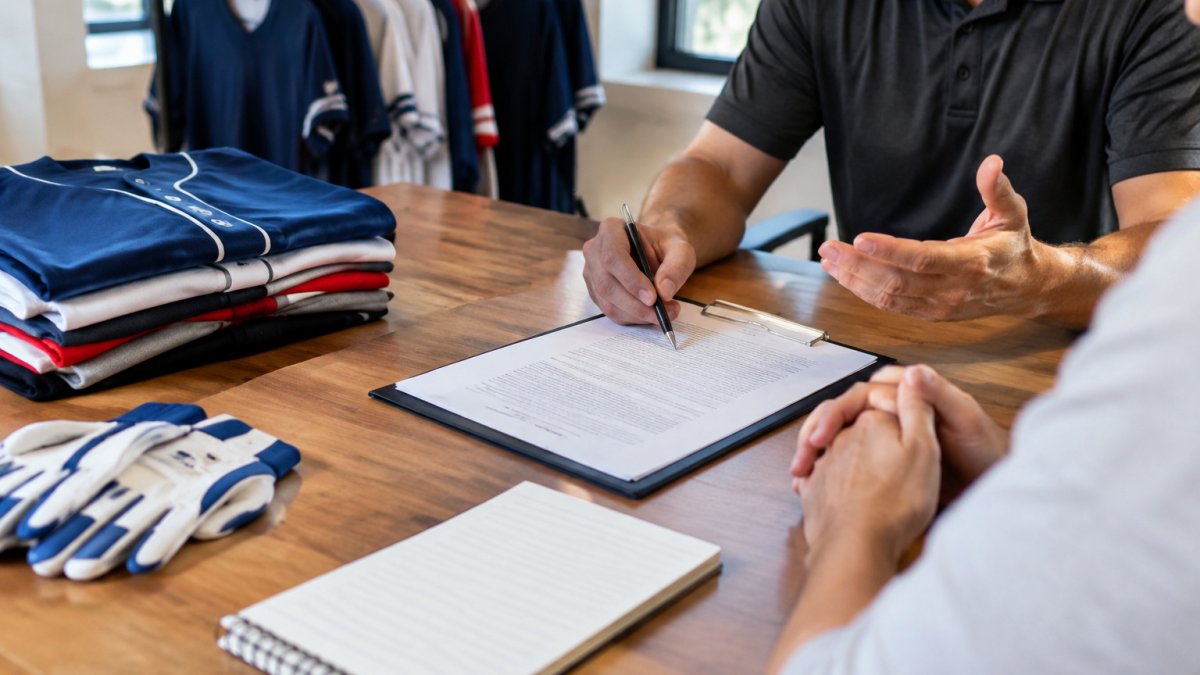
Set your tolerance before production and hold every batch to it. Write the number, the formula, and the illuminant into the purchase agreement so there is no argument at delivery.
Measuring Uniformity Across a Single Garment
Color uniformity is not just batch-to-batch; it is also across one garment. Sleeves, body panels, and trim can come from different dye lots or different print passes. To check uniformity:
Mark four to six fixed measurement points on the garment (for example, center chest, left sleeve, right sleeve, and lower hem).
Take a reading at each point under the same conditions used for the reference.
Compute the Delta E between each point and the approved reference, and between the points themselves.
Set a within-garment tolerance (a common target is Delta E ≤ 1.5 between any two points on the same garment) and reject garments that exceed it.
For printed or sublimated surfaces, add a visual check under a daylight-balanced lamp at a 45° viewing angle, because print dot gain and fabric texture can create variation that a single aperture reading averages away.
Agree on these numbers up front and put them in writing. A tolerance that lives only in someone's head is not a tolerance.
These are the Delta E acceptance thresholds the article recommends setting before production.
Delta E range | What it means | Action |
≤ 1.0 | Visually indistinguishable to most observers | Suitable for side-by-side panels on same garment |
1.0-2.0 | Close match | Acceptable for most team uniform programs |
2.0-3.0 | Noticeable to a trained eye | Flag for review against risk tolerance |
> 3.0 | Visibly different | Reject or rework |
Step 5: Check Color Consistency Across Multiple Devices and Reorders
Color consistency across devices and reorders is where most teams quietly lose ground. The first order looks great. The second order, placed months later, drifts. Protect consistency by keeping your reference swatch, your measurement log, and your tolerance numbers on file for every reorder.
If you are planning a reorder or placing a multi-device order, you can contact customer service to confirm color details before you commit.
Step 6: Control the Environment and Inspect What You Receive
Your inspection room is part of your process. Ambient lighting, wall color, and even a bright window can shift how a shade reads. Control the environment where you judge color, then inspect what actually arrives before the season starts.
When the box lands, do three things:
Open and check colors against your reference immediately
Compare across sizes, not just one garment
Report any mismatch before tags come off
Catching a color shift on delivery day is cheap. Catching it on game day is not.
Order Color-Matched Uniforms for Your Team
Here is the challenge: color drift is invisible until it is expensive. The teams that avoid it are the ones that approve a physical sample, measure every batch, and keep a reference on file.
At Hometown Team Sports, we build color control into the order. You get unlimited fabric color choices, so your team colors are set exactly how you want them.
Ready to lock in your team's colors? Apply the color-matching steps to a garment where color accuracy is critical with the Erskine Full Custom Hoodie. You can also order a fully customizable custom short sleeve dri fit tee in your approved team colors.
Get started with Hometown Team Sports and put a real color process behind every uniform your team wears.
Frequently Asked Questions
How can you keep uniform colors consistent across a team order?
Lock in a physical color standard before production starts, then verify every batch against it. Approve a fabric swatch and a leather swatch in person, record the measured values, and require the supplier to hold those tolerances on every run. Ask for a pre-production sample from the actual fabric lot. Uniform color accuracy comes from one approved reference that everyone measures against, not from matching a screen.
How do you match a digital design color to fabric?
You cannot match a screen directly to fabric, because monitors emit light while fabric reflects it. Convert your design to a physical swatch first, then compare the swatch to the fabric under neutral lighting. Use a spectrophotometer to read both and check the Delta E difference. If the gap is too wide, adjust the dye recipe or fabric choice rather than the screen.
Does monitor calibration guarantee accurate printed or fabric colors?
No. Calibration only makes your display trustworthy for judging digital files. Fabric color depends on dye, substrate, and lighting, so a calibrated monitor still cannot predict how a jersey will look on the field. Pair display calibration with physical custom uniform color samples and measured tolerances for the full picture.
How can you check that a uniform reorder matches the original?
Keep the approved reference swatch and its recorded measurements on file. When the reorder arrives, measure a sample under the same lighting conditions and compare the Delta E to the original reading. Also compare visually against the saved swatch, not against a worn jersey that has faded from sun and washing. A written tolerance in the order spec makes this check straightforward.
Color mistakes cost teams time, money, and a season of looking mismatched. Hometown Team Sports helps you avoid that with physical sample approval, unlimited fabric color choices, and 42 leather color options for gloves that match the rest of the kit. Order online today and give your team gear that looks as sharp on the field as it does in the design tool.

Comments